Marcus Johnson
Houston, Texas · Based in Houston

“I walked through the Door of No Return and I understood — I wasn't visiting. I was coming back.”
I almost didn't go. That's the thing nobody tells you about heritage travel — the closer you get to the truth, the more reasons your mind invents to turn around. I had the ticket booked for three months before I actually boarded the plane. I'm a high school history teacher in Houston, Texas. I teach African American history to eleventh graders. I have read every book. I have shown every documentary. But reading about the transatlantic slave trade and standing in the place where it happened are two entirely different kinds of knowing.
The flight was long. I landed at Accra International Airport — AIA — at dawn, and when I stepped off the plane and the warm air hit my face, something shifted in my chest. I don't know how to describe it except to say that my body recognized something my mind had never been taught. The people around me looked like my family. Not metaphorically. Actually. I saw my uncle's forehead. My cousin's walk. My grandmother's hands.
The drive from Accra to Cape Coast took about three hours along the coast road. I watched the Atlantic Ocean through the window and thought about how that same water connected Houston to this shore. My driver, a man named Kofi, played highlife music and pointed out landmarks. He was gentle with me, as if he knew what I was driving toward.
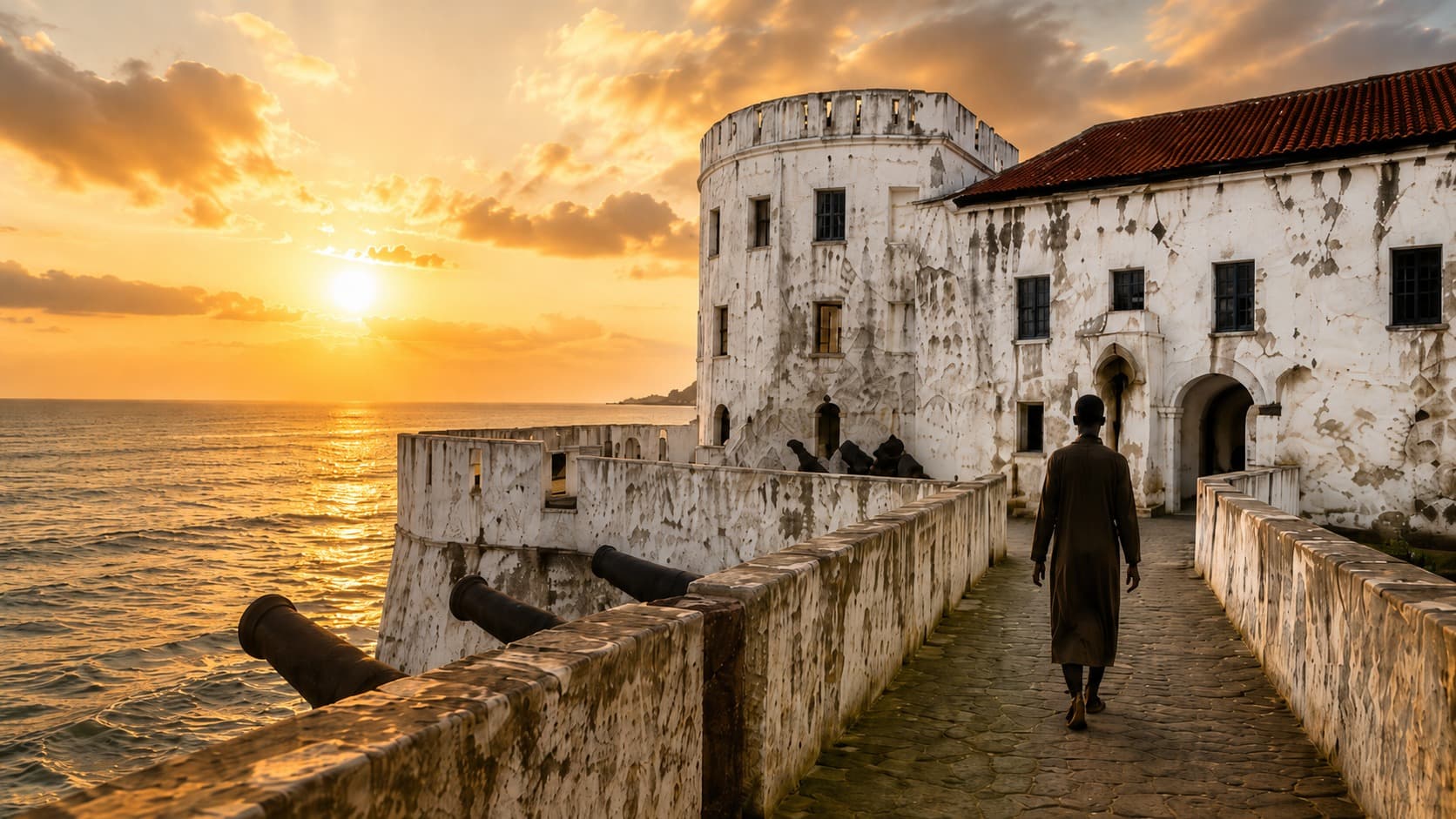
Cape Coast Castle is white against the blue sky. It is beautiful, and that beauty is part of its horror. I walked through the courtyards where British officers once dined and danced above the dungeons where enslaved Africans were held. The guide led our group underground, into the male dungeon. The ceiling was low. The air was thick. There were grooves worn into the stone floor from centuries of human bodies. The guide said that at any given time, up to a thousand men were held in that single room. He paused and let the silence do the teaching.
Then he said something I will carry for the rest of my life. He looked at me — looked directly at me — and said, "Your ancestors may have stood in this exact spot. They survived this room so that you could stand here today." I couldn't speak. I couldn't breathe properly. A woman next to me, a sister from Chicago, took my hand, and we held onto each other like we were keeping each other from falling.
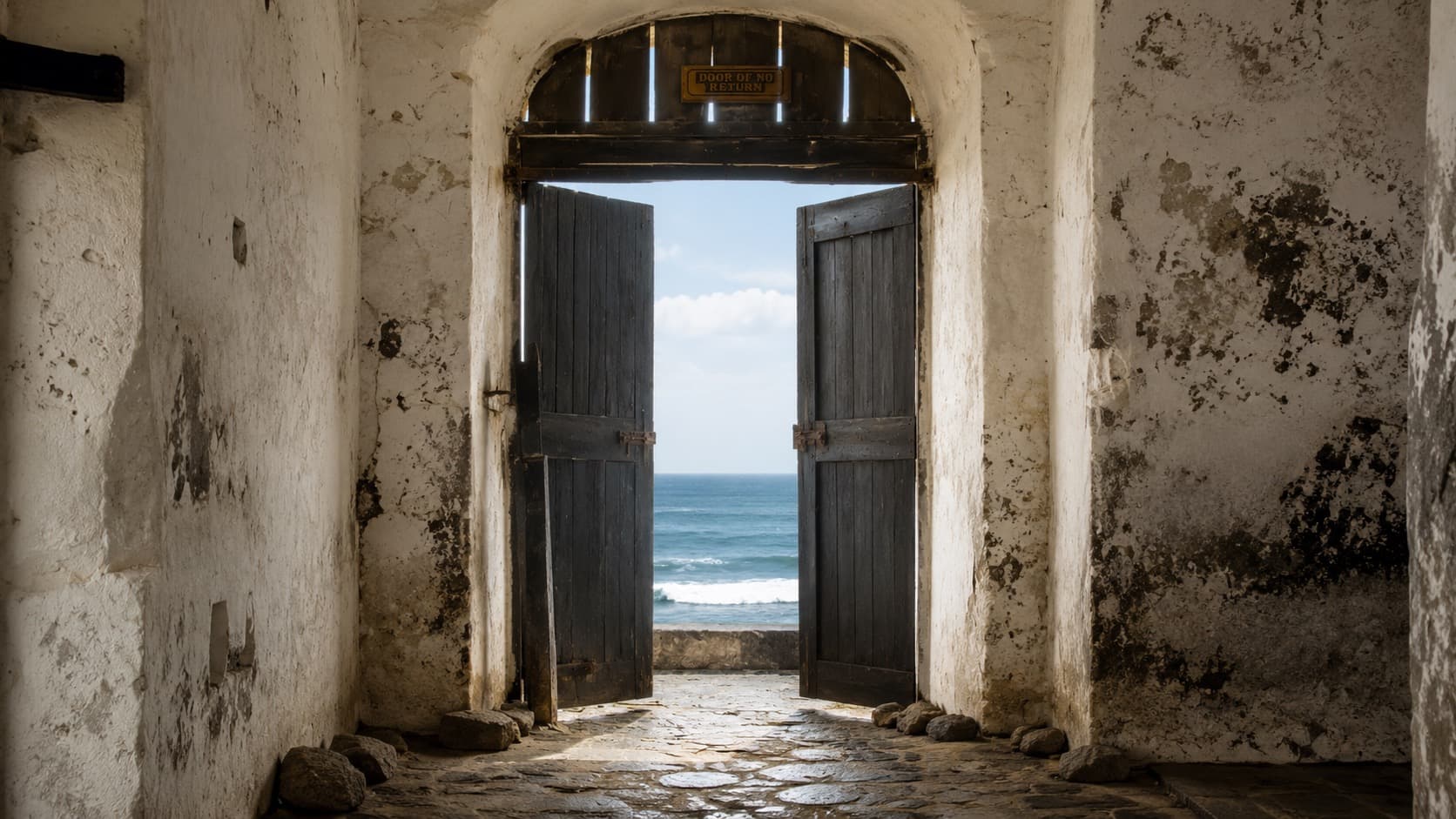
The Door of No Return is a small, narrow opening in the castle wall that leads out to the sea. Enslaved people walked through it onto the ships and never came back. There is a ceremony now where descendants of the diaspora walk through the door and then turn around and walk back through it. They call it the Door of Return. When I walked through and turned around and stepped back onto Ghanaian soil, I wept. I wept like I had been holding something for four hundred years and finally had permission to set it down.
I have been back to Houston for five months now, and I am not the same teacher I was. I teach with a weight and a reverence I did not have before. My students see it. I am planning to bring a group of them to Ghana next summer. They need to stand where I stood. They need to feel what I felt.
Ghana didn't give me answers. It gave me the right questions.
Browse verified tours or tell us what you want — we’ll build it.